

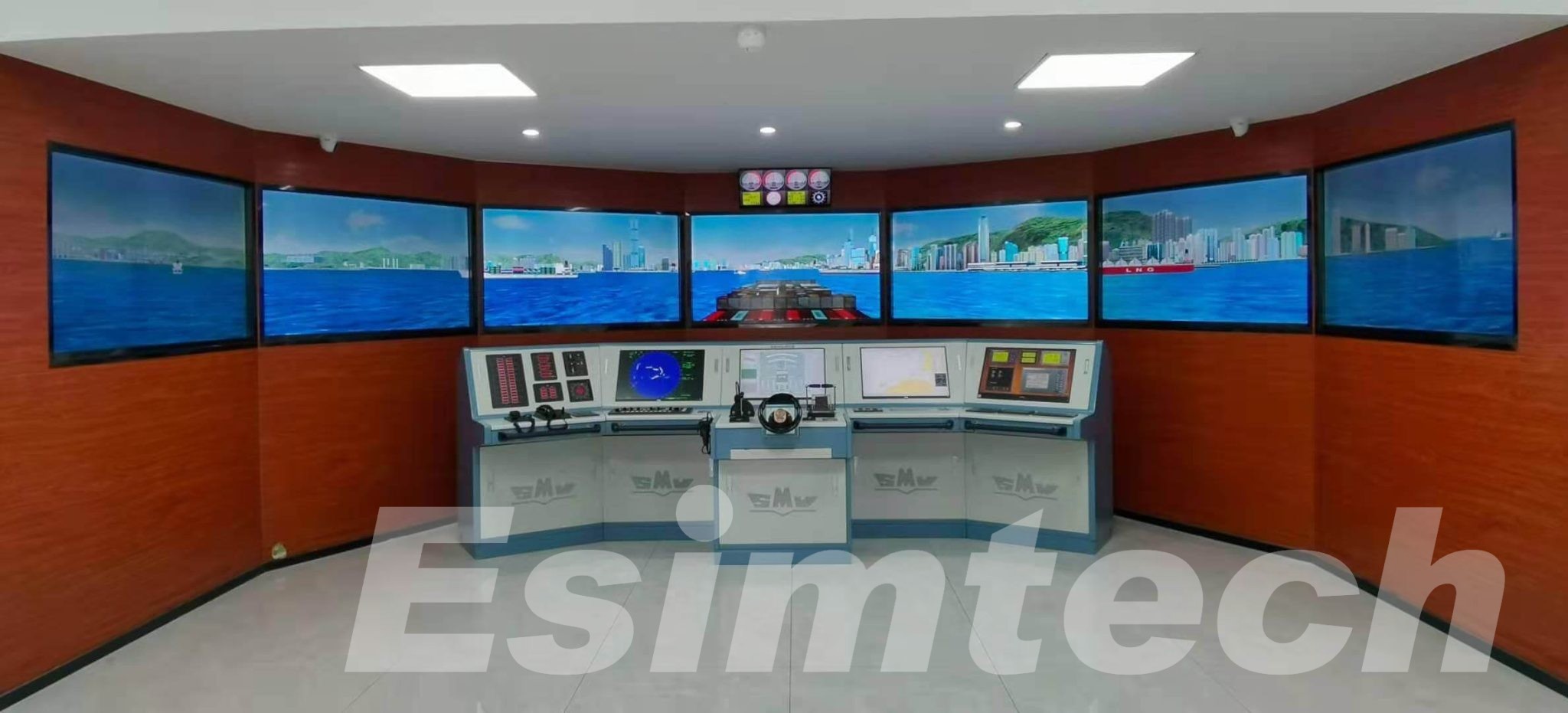
The maritime industry relies on precision, safety, and continuous skill development to navigate complex waterways, adapt to changing conditions, and mitigate risks. Among the critical tools shaping modern maritime operations is the navigation simulator—a technology designed to replicate real-world sailing scenarios while providing a controlled, risk-free environment for training and research. This article explores the core functions, regulatory compliance, and diverse applications of navigation simulators, highlighting their role in advancing maritime safety and efficiency.
What Is a Maritime Navigation Simulator?
A maritime navigation simulator is a comprehensive system modeled after a ship’s bridge, integrating hardware and software to recreate realistic maritime environments. Key components typically include Electronic Chart Display and Information System (ECDIS), Global Positioning System (GPS), ARPA radar, automatic tracking and navigation tools, and voice communication systems. To enhance immersion, these simulators often use single or multi-channel large-screen wide-angle visual projection, leveraging real-time visual simulation, multi-data fusion, and network communication technologies. The result is a highly realistic replication of surrounding water areas, traffic conditions, and ship handling characteristics—allowing users to gain experience that closely mirrors actual ship operations.
Core Functions of Navigation Simulators
Navigation simulators are engineered to support a wide range of maritime tasks and training objectives, including:
- Routine navigation: Simulating travel in open waters, restricted channels, port entry/exit, berthing/unberthing (with tug assistance and mooring line handling), buoy mooring/unmooring, and anchoring operations.
- Complex scenario training: Preparing seafarers for multi-ship encounter and collision avoidance, ship handling under varying weather conditions, visibility levels, and wind/current/sea states. It also covers emergency responses to equipment failures, severe weather, and other hazardous situations.
- Specialized skill development: Offering training in navigation lights and shapes, ARPA operation, radar plotting, ECDIS usage, and bridge resource management—critical competencies for effective bridge team coordination.
- Administrative and analytical support: Providing multi-data recording and playback capabilities, as well as practice evaluation, analysis, and printing functions to track progress and identify areas for improvement.
Regulatory Compliance and Credibility
For navigation simulators to be recognized as valid training and assessment tools, they must adhere to strict industry standards and regulations. Leading systems, such as those developed by Esimtech, often hold ISO 9001 quality system certification from DNV and relevant authorities like the China Maritime Safety Administration. They also meet the requirements of Class A full-mission ship handling simulators as defined by DNV classification standards and comply with the mandatory provisions of the STCW 78/95 Convention—an international agreement governing the training, certification, and watchkeeping of seafarers. Additionally, these simulators align with domestic regulations, such as China’s “Regulations on Competency Examination, Assessment, and Certification of Seafarers” issued by the Ministry of Transport, ensuring their validity for both global and regional maritime training needs.
Diverse Applications Beyond Training
While seafarer training is a primary use case, navigation simulators offer value across multiple maritime sectors:
- Infrastructure design: Supporting fairway (channel) and port design by testing navigability and identifying potential bottlenecks or safety hazards before construction.
- Research and development: Facilitating studies on ship maneuvering performance, human behavior in maritime settings, and the effectiveness of navigation systems.
- Operational assessment: Evaluating tugboat effectiveness and supporting bridge resource management initiatives to optimize team performance.
- Accident investigation: Providing a reliable platform to recreate maritime incidents, analyze contributing factors, and inform preventive measures.
Conclusion
Navigation simulators have become indispensable tools in the maritime industry, bridging the gap between theoretical knowledge and practical experience while ensuring compliance with global standards. Their ability to replicate realistic scenarios, support skill development, and enable data-driven analysis makes them vital for enhancing seafarer competence, improving operational safety, and driving innovation in maritime design and research. As the industry continues to evolve, navigation simulators will remain at the forefront of efforts to build a safer, more efficient maritime ecosystem.
For those seeking reliable navigation simulation solutions that meet international standards, exploring established providers like Esimtech can offer access to certified systems tailored to training, research, and operational needs.


 Arabic
 French
 Spanish
 Portuguese
 Deutsch
 Turkish
 Dutch
Dutch
 Italiano
 Russian
 Romaian
 Portuguese (Brazil)
 Greek
Greek