

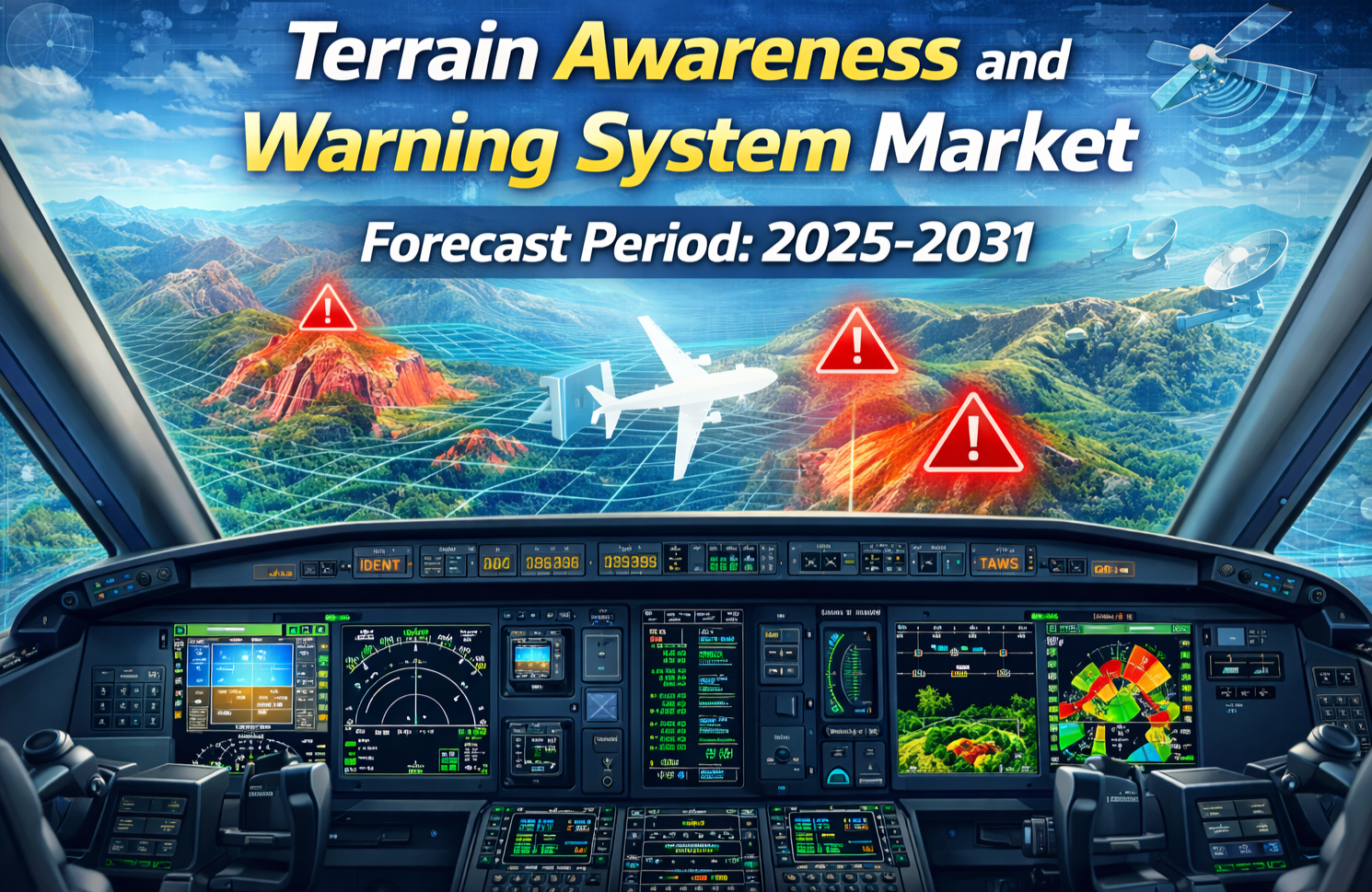
The Terrain Awareness and Warning System (TAWS) represents cutting-edge onboard avionics that safeguards against Controlled Flight Into Terrain (CFIT) incidents by providing pilots with timely alerts to imminent ground collisions.
Terrain Awareness and Warning System Market Forecast and Overview
The Terrain Awareness and Warning System Market is gaining significant momentum as aviation safety regulations and technological advancements continue to evolve across the global aerospace industry. TAWS is an advanced avionics system designed to prevent controlled flight into terrain (CFIT) accidents by providing pilots with real-time alerts and terrain proximity warnings. With the rapid growth of global air traffic, increasing aircraft deliveries, and rising emphasis on flight safety, the demand for terrain awareness systems is expected to increase steadily during the forecast period from 2025 to 2031.
Importance of TAWS in Aviation Safety
The adoption of TAWS solutions has become essential for both commercial and military aircraft operations. Regulatory authorities around the world have mandated the installation of terrain awareness systems in various aircraft categories, particularly in commercial aviation. These systems use GPS data, digital terrain databases, and onboard sensors to analyze aircraft position relative to surrounding terrain. By delivering visual and auditory alerts to pilots, TAWS significantly enhances situational awareness and helps prevent accidents caused by poor visibility, pilot disorientation, or navigation errors.
Technological Advancements in Terrain Awareness Systems
Technological innovation is playing a key role in the expansion of the TAWS market. Modern terrain awareness systems integrate with other avionics systems such as flight management systems, autopilot, and enhanced vision systems. These integrated capabilities allow pilots to receive more accurate and predictive terrain alerts. Furthermore, advancements in artificial intelligence, machine learning, and real-time data processing are enabling next-generation terrain warning systems to provide smarter and more predictive safety features.
Terrain Awareness and Warning System Market Segmentation
In terms of System Type, Class A systems are widely used in larger aircraft due to their advanced alerting and monitoring capabilities. Class B systems are typically designed for smaller commercial and business aircraft, while Class C systems are used in specialized aviation applications where customized terrain awareness solutions are required. Each class of system serves specific operational requirements, contributing to the diversity of the market.
Based on Aircraft Type, the market is divided into fixed-wing aircraft and rotary-wing aircraft. Fixed-wing aircraft currently account for a major share of the market due to their extensive use in commercial airline fleets. However, rotary-wing aircraft, including helicopters used for rescue operations, defense missions, and offshore transportation, are increasingly adopting terrain awareness systems to improve operational safety in complex flying environments.
From an End-user Perspective, both commercial and military sectors play a crucial role in driving demand. The commercial aviation sector continues to expand due to the growing number of passengers worldwide and the expansion of airline fleets. Meanwhile, the military sector is investing heavily in advanced avionics systems to enhance mission safety and situational awareness during tactical operations. These factors collectively support the continued growth of the terrain awareness and warning system market.
Get Sample PDF- https://www.theinsightpartners.com/sample/TIPRE00005232
Regional Market Insights
Geographically, North America currently dominates the market due to the strong presence of leading avionics manufacturers and high adoption of advanced aviation technologies. Europe also represents a significant market, driven by strict aviation safety regulations and a well-established aerospace sector. Meanwhile, the Asia-Pacific region is expected to experience the fastest growth during the forecast period as countries such as China, India, and Japan expand their commercial aviation infrastructure and invest in modern aircraft fleets.
Key Players in the Terrain Awareness and Warning System Market
- Aspen Avionics, Inc. – Known for advanced avionics retrofit solutions for general aviation aircraft.
- Collins Aerospace – A major aerospace technology provider offering integrated avionics and safety systems.
- Elbit Systems Ltd. – Provides advanced avionics and defense-grade terrain awareness technologies.
- Garmin Ltd. – A leading developer of GPS-based avionics and navigation systems widely used in aviation.
- Genesys Aerosystems – Specializes in autopilot and flight control systems with integrated safety features.
- Honeywell International Inc. – A global leader in aviation safety systems, including advanced TAWS solutions.
- L3Harris Technologies, Inc. – Offers mission-critical avionics and terrain awareness solutions for defense and commercial aviation.
- Avidyne Corporation – Develops integrated flight deck avionics with enhanced situational awareness capabilities.
- Sandel Avionics, Inc. – Focuses on terrain display and navigation safety solutions for pilots.
- Thales Group – Provides sophisticated avionics and safety systems for modern aircraft platforms.
Future Outlook
The future of the Terrain Awareness and Warning System market appears highly promising as aviation safety continues to remain a top priority worldwide. Increasing aircraft deliveries, the modernization of existing fleets, and stricter aviation safety regulations will drive sustained demand for advanced terrain awareness technologies. In addition, the integration of artificial intelligence, cloud-based terrain databases, and enhanced real-time analytics is expected to transform the capabilities of TAWS systems in the coming years. The growing use of unmanned aerial vehicles (UAVs), urban air mobility platforms, and next-generation aircraft will also create new opportunities for terrain awareness technologies. As a result, the market is expected to witness steady growth through 2031, supported by innovation, regulatory compliance, and the aviation industry's continuous commitment to improving flight safety.
Other Reports-
Enhanced Flight Vision System Market
Aerospace Ducting Market

 English
 Arabic
 French
 Spanish
 Portuguese
 Deutsch
 Dutch
Dutch
 Italiano
 Russian
 Romaian
 Portuguese (Brazil)
 Greek
Greek