

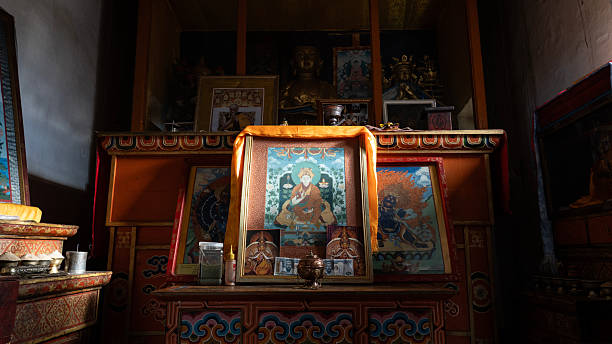
Nestled in the “Golden Valley” (Regong in Tibetan) along the Longwu River Basin in Qinghai Province, China, Regong Thangka stands as a brilliant gem of Tibetan Buddhist art and a UNESCO-listed intangible cultural heritage. More than just a painting, it is a sacred carrier of faith, a repository of cultural memory, and a testament to the meticulous craftsmanship of generations of artists. For centuries, this art form has been passed down through master-apprentice and father-son lineages, blending religious devotion with artistic excellence to create works that captivate the eye and nourish the spirit. In this article, we will explore the rich history of Regong Thangka, dissect its unique artistic characteristics, and uncover the profound cultural and spiritual significance that makes it a cherished treasure worldwide.
The History of Regong Thangka: From Humble Origins to Global Acclaim
Regong Thangka traces its roots back to the 13th century, emerging alongside the rise of the Longwu Monastery in the Regong region – a place known as the “Golden Valley where dreams come true” in Tibetan. This period marked a transition in Tibetan Buddhist art, as artists began to move away from earlier Indian and Nepalese influences and develop a style that reflected local aesthetics and cultural traditions. What began as a sacred art form practiced primarily by Buddhist monks in monasteries gradually spread to nearby villages, where lay artists embraced the craft and added their own regional touches.
Over the centuries, Regong artists traveled far and wide – to Tibet, Gansu, Sichuan, and even neighboring countries like India, Myanmar, and Nepal – absorbing diverse artistic influences and refining their craft. In 2006, Regong Art (including Thangka) was listed as a National Intangible Cultural Heritage in China, and in 2008, it was inscribed on the UNESCO Representative List of the Intangible Cultural Heritage of Humanity, solidifying its place as a global cultural treasure.
Artistic Characteristics of Regong Thangka: Craftsmanship, Color, and Iconography
Regong Thangka is distinguished by its meticulous craftsmanship, vibrant colors, and strict adherence to Buddhist iconographic rules – elements that set it apart from other forms of Thangka art. Every step of its creation is steeped in tradition and devotion, reflecting the artist’s respect for both the craft and the spiritual beliefs it embodies.
1. Rigorous Creation Process
Creating a Regong Thangka is a labor-intensive and sacred process that can take months to years to complete, depending on the size and complexity of the work. Before even picking up a brush, artists undergo spiritual purification: they bathe regularly, eat a vegetarian diet, avoid strong-smelling foods, and recite Buddhist scriptures to ensure a pure mind and steady hand. They also burn incense and wait for the smoke to rise straight – a sign that the environment is calm and free of distractions – before beginning to paint.
The technical steps are equally precise. First, high-quality cotton cloth is stretched tightly on a wooden frame and treated with a mixture of gypsum powder and cow glue to create a smooth, absorbent surface. Next, the artist sketches the outline using charcoal, following strict proportional rules from ancient Buddhist painting books – known as the “Suo’er” system, where one Suo’er equals roughly the width of a finger. Only after the sketch is approved do artists begin applying colors and refining the details with ultra-fine brushes, a skill that requires at least eight years of training to master.
2. Vibrant, Long-Lasting Colors
One of the most striking features of Regong Thangka is its use of natural mineral and plant pigments, which ensure the colors remain vivid for centuries. Artists source pigments from lapis lazuli (for blue), malachite (for green), cinnabar (for red), and gold (for highlights), grinding them by hand into a fine powder and mixing them with natural binders like animal glue. This traditional method not only creates rich, layered colors but also makes the paintings resistant to fading, even when exposed to light and time.
The color palette of Regong Thangka is symbolic: gold represents the divine and enlightenment, red symbolizes compassion and energy, blue denotes wisdom and tranquility, and green signifies life and harmony[7]. The liberal use of gold leaf – a hallmark of 19th-century Regong Thangka – adds a sense of grandeur and sacredness, making the works shine with a timeless luster.
3. Strict Iconography and Spiritual Symbolism
Regong Thangka is deeply rooted in Tibetan Buddhism, and every detail – from the posture of deities to the smallest decorative motif – carries spiritual meaning. Artists must strictly follow the rules of Buddhist iconography, which dictate the proportions, mudras (hand gestures), and attributes of each deity. For example, a Buddha might be depicted with a calm expression, a gesture of compassion, and holding a lotus flower (symbolizing purity), while a protector deity might have a more fierce expression and hold weapons (symbolizing the defeat of ignorance)[7].
Common themes include斯巴霍 (Sipa Kho, the Wheel of Life), biographical scenes of the Buddha or Buddhist masters, and depictions of sacred landscapes like Mount Meru. These works are not just decorative; they serve as tools for meditation and devotion, helping practitioners connect with the divine and understand Buddhist teachings.
The Cultural and Spiritual Significance of Regong Thangka
Regong Thangka is more than an art form – it is a living expression of the culture, faith, and identity of the Tibetan and Tu ethnic groups who have nurtured it for centuries. It embodies the spiritual history of the Regong region, blending Buddhist philosophy with local traditions to create a unique cultural tapestry.
For the people of Regong, painting Thangka is not just a profession but a form of spiritual practice. Every brushstroke is an act of devotion, and artists approach their work with deep piety, believing that creating a Thangka is a way to accumulate merit and honor the divine. This spiritual connection is what gives Regong Thangka its soul, making it more than a painting – it is a bridge between the material and spiritual worlds.
Beyond its spiritual significance, Regong Thangka plays a vital role in preserving cultural heritage. The master-apprentice inheritance system ensures that ancient techniques, iconographic knowledge, and cultural stories are passed down from one generation to the next, keeping the tradition alive in a rapidly changing world. Today, young artists are embracing the craft, blending traditional techniques with contemporary influences to ensure that Regong Thangka continues to evolve while honoring its roots.
Globally, Regong Thangka has become a symbol of cross-cultural understanding, showcasing the beauty and depth of Tibetan Buddhist art to audiences around the world. It serves as a reminder of the importance of preserving intangible cultural heritage – not just as a historical artifact, but as a living tradition that enriches our global culture.
How to Appreciate and Care for Regong Thangka
Appreciating Regong Thangka requires both an understanding of its artistic techniques and its spiritual context. When viewing a Regong Thangka, start by observing the overall composition – its balance, color harmony, and attention to detail. Then, look closely at the line work: fine, smooth lines indicate a skilled artist, while the use of natural pigments adds depth and richness to the piece. Finally, take time to understand the iconography, as each element carries a specific meaning that enhances the work’s spiritual power.
Caring for a Regong Thangka is also essential to preserve its beauty for generations. Keep it away from direct sunlight, moisture, and extreme temperatures, as these can cause fading and damage to the cloth and pigments. Avoid touching the surface with bare hands, as oils and dirt can stain the painting. If the Thangka becomes dusty, gently brush it with a soft, dry brush – never use water or cleaning products. For mounted Thangkas, ensure the frame is sturdy and the fabric borders (typically three layers of red, yellow, and blue) are intact, as these are part of the traditional design and protect the painting.
Conclusion
Regong Thangka is a masterpiece of human creativity, a fusion of art, faith, and culture that has stood the test of time. From its humble origins in the Golden Valley of Qinghai to its recognition as a UNESCO Intangible Heritage, it has captivated people with its meticulous craftsmanship, vibrant colors, and profound spiritual meaning. It is a testament to the dedication of generations of artists who have preserved and refined this ancient tradition, ensuring that it continues to inspire and enlighten audiences around the world.
Whether you are a lover of art, a student of culture, or a spiritual seeker, Regong Thangka offers something profound. It is more than a painting – it is a living legacy, a window into the soul of a region, and a reminder of the power of art to connect us to our history, our faith, and each other. As this timeless art form continues to evolve, it will undoubtedly remain a cherished treasure for centuries to come.

 English
 Arabic
 French
 Spanish
 Portuguese
 Deutsch
 Dutch
Dutch
 Italiano
 Russian
 Romaian
 Portuguese (Brazil)
 Greek
Greek