

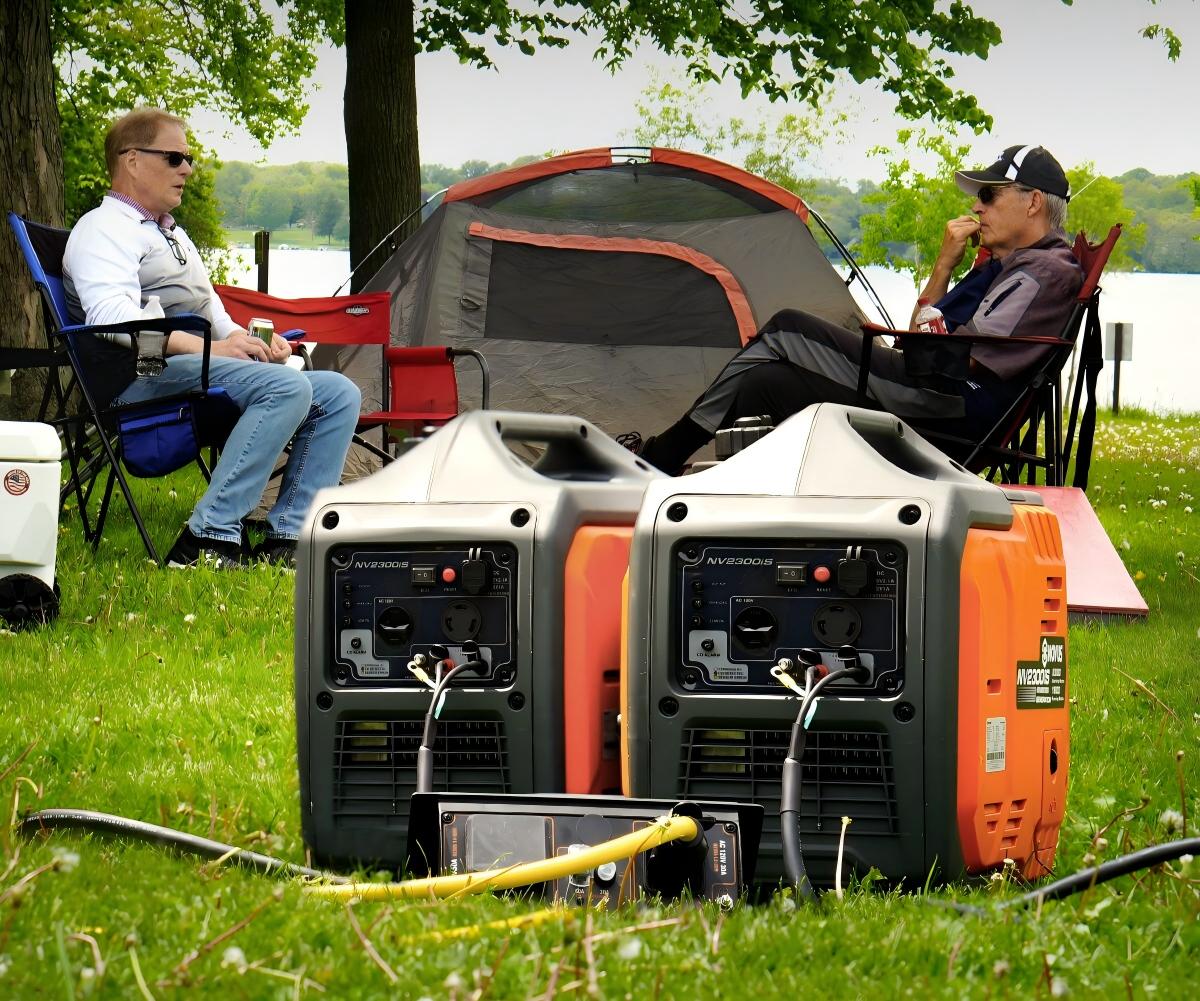
In today’s world, reliable power supply is essential for outdoor adventures, emergency backups, small construction projects, and even recreational vehicle trips. Yet, many users face a dilemma: a single inverter generator often lacks the power to run high-demand devices like air conditioners, electric drills, or refrigerators, while a standalone high-power generator is cumbersome to transport, fuel-inefficient at low loads, and costly. Fortunately, parallel inverter generators offer a practical solution—combining the flexibility of small units with the output of a larger system. This guide covers everything you need to know about paralleling inverter generators, from compatibility requirements to step-by-step setup and real-world applications.
What Are Parallel Inverter Generators?
Parallel inverter generators refer to two or more compatible inverter generators connected via dedicated parallel cables or modules. When linked correctly, these units synchronize their voltage, frequency, and phase to deliver combined power, effectively creating a larger, more capable power supply. The core advantage of this setup is retaining the key benefits of inverter generators—low noise, high power quality, and fuel efficiency—while enabling scalable power output. Unlike traditional high-power generators, parallel systems let you adjust capacity based on demand, making them ideal for scenarios where power needs fluctuate.
Which Inverter Generators Can Be Paralleled?
Not all inverter generators support parallel operation. To ensure safety and performance, three critical conditions must be met:
- Model & Power Matching: Generators must be the same brand, same model, and same rated power (e.g., two 2kW units—mixing 2kW and 3kW units is not allowed). This ensures consistent internal circuits and control logic for automatic frequency and phase synchronization.
- Parallel Function Support: Units must feature a built-in “parallel mode” or compatibility with external parallel modules/cables. Older pure sine wave generators or standard inverters without this function cannot be paralleled directly.
- Parameter Consistency: Output voltage (e.g., 220V), frequency (50Hz), and waveform must be identical. Parameter deviations can cause circulating currents, leading to burned windings or damaged electronic components.
Why Choose Parallel Inverter Generators?
Paralleling small-power inverter generators offers distinct advantages over investing in a single high-power unit:
- Flexible Power Expansion: Run one generator for low-power needs (e.g., charging phones) and add a second for high-demand devices (e.g., air conditioners)—scale up or down as required.
- Quieter Operation: Smaller generators typically produce less noise than large units. Paralleling two low-noise units results in a quieter setup than a single high-power generator.
- Fuel Efficiency: Inverter generators adjust engine speed based on load. At low loads, small units consume significantly less fuel than a large generator running at idle.
- Portability: Two compact, lightweight generators are easier to carry, load, and transport than one heavy high-power unit—perfect for camping, RV trips, or job sites with limited access.
Step-by-Step Guide to Parallel Connection
Follow these steps to safely and effectively parallel two inverter generators:
- Pre-Connection Preparation:
- Ensure both generators are off, with output switches in the “off” position.
- Gather manufacturer-provided parallel cables, grounding devices, and load cables. Inspect all accessories for damage, wear, or aging—never use faulty equipment.
- Wiring & Grounding:
- Disconnect the output circuit breakers of both generators to prevent electric shock during wiring.
- Insert the parallel cable ends into the generators’ parallel interfaces and lock them securely to avoid loose connections, sparks, or interface damage.
- Implement grounding protection: Use grounding wires to connect the grounding terminals of both units to a reliable ground—critical for outdoor, humid, or metal-rich environments to reduce electric shock risk.
- Connect the load: Attach the main load cable to either generator’s output socket or the parallel total output end. Ensure the total load does not exceed the sum of the generators’ rated powers, with a 10%–20% margin (e.g., two 2kW units = max 3.6kW load) to prevent overload.
- Startup & Synchronization:
- Start the first generator and let it run for 3–5 minutes until idle speed, voltage, and frequency stabilize.
- Switch the first unit to “parallel mode”—it will enter a “waiting for synchronization” state.
- Start the second generator and let it stabilize, then switch to “parallel mode.”
- Allow 1–2 minutes for automatic synchronization (phase and frequency adjustment). When both units’ “parallel indicator lights” stay on (check the user manual for brand-specific indicators), synchronization is complete, and the system is ready for use.
Ideal Applications for Parallel Inverter Generators
Parallel inverter generator systems excel in diverse scenarios, including:
- Outdoor camping and RV power (running appliances, lighting, and charging devices)
- Home emergency backup (powering refrigerators, heaters, or medical equipment during outages)
- Small construction site power (operating electric drills, saws, and temporary lighting)
- Outdoor event support (powering stage equipment, sound systems, and lighting)
- Yacht and temporary dock power supply
They are particularly well-suited for environments with strict noise restrictions and variable power demands.
Frequently Asked Questions
- Can more than three inverter generators be paralleled? Some brands support multiple-unit paralleling, but the standard design is for two units. Always refer to the product manual for specific guidelines.
- Will voltage increase after paralleling? No—parallel systems maintain the standard output voltage (e.g., 220V) while increasing available power.
Conclusion
Parallel inverter generators provide an efficient, flexible, and cost-effective power solution for both personal and professional use. By selecting compatible models and following proper setup procedures, you can easily meet high-power demands without sacrificing the benefits of inverter technology—low noise, fuel efficiency, and portability. Whether for outdoor adventures, home emergencies, or temporary work sites, parallel inverter generators offer a reliable way to access scalable power exactly when and where you need it.

 English
 Arabic
 French
 Spanish
 Deutsch
 Turkish
 Dutch
Dutch
 Italiano
 Russian
 Romaian
 Portuguese (Brazil)
 Greek
Greek