

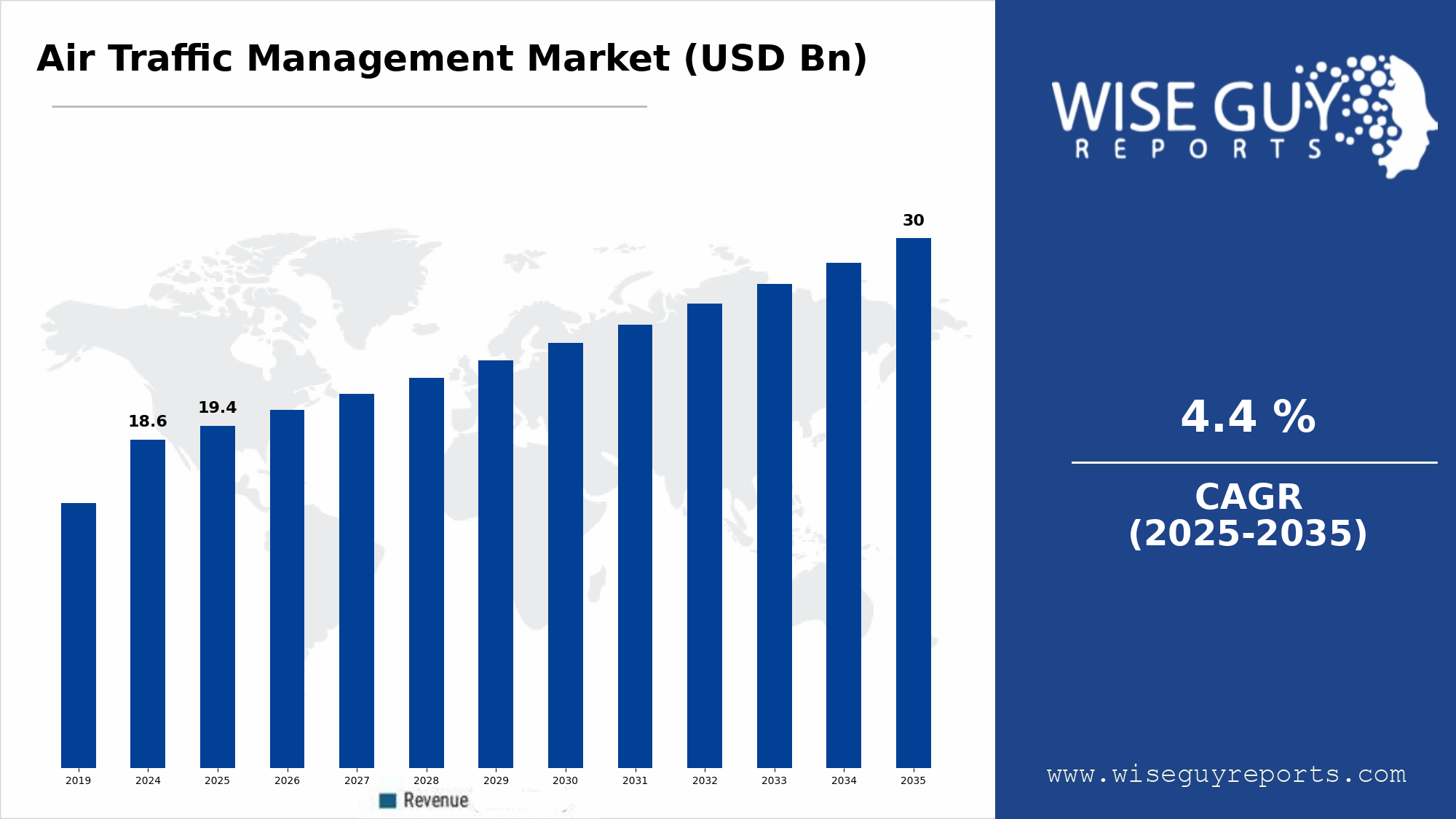
The global Air Traffic Management Market is projected to increase from 19.4 USD Billion in 2025 to approximately 30 USD Billion by 2035, representing a CAGR of around 4.4% during the forecast period between 2025 and 2035. This growth highlights the increasing need for advanced systems capable of managing the rising complexity of global airspace.
With air passenger numbers continuing to rise, aviation authorities and airport operators face growing pressure to maintain efficient and safe air traffic operations. The Air Traffic Management Market has therefore become a critical segment within the aviation ecosystem, enabling improved airspace coordination and operational efficiency.
Air traffic management includes a broad range of services such as air traffic control, flight planning, aeronautical information services, meteorological support, and rescue coordination. Together, these systems ensure the safe navigation of aircraft throughout their journey, from departure to arrival.
The expansion of international air travel is one of the primary drivers of market growth. As airlines introduce new routes and increase flight frequencies, airspace congestion becomes a major challenge. Advanced ATM technologies help address this issue by optimizing air traffic flows and enabling more precise flight routing.
Another key factor contributing to market expansion is the rapid advancement of digital technologies. Artificial intelligence and machine learning are being increasingly integrated into ATM platforms to enhance predictive capabilities and automate routine tasks. These technologies allow air traffic controllers to manage complex airspace environments more effectively.
Automation is also improving operational efficiency across airports and aviation networks. Automated surveillance systems, satellite navigation technologies, and real-time data sharing platforms help streamline communication between pilots, controllers, and ground operations. This integration reduces the risk of human error and improves situational awareness.
The market is also benefiting from the development of smart airports. Modern airports are adopting digital technologies such as Internet of Things (IoT) sensors, advanced radar systems, and cloud-based platforms to improve operational efficiency. These technologies enable seamless coordination between airport infrastructure and air traffic management systems.
In addition to commercial aviation, defense and military applications are also contributing to market demand. Military aircraft operations require highly secure and reliable air traffic management systems to coordinate training missions, surveillance flights, and tactical operations.
Another important trend shaping the market is the emergence of remote air traffic control towers. These digital towers allow controllers to monitor airport operations from centralized control centers using high-resolution cameras and advanced sensor networks. Remote tower technology can significantly reduce infrastructure costs while improving operational flexibility.
The growing adoption of satellite-based navigation systems such as GPS-enabled air traffic management is also transforming the aviation landscape. These systems allow aircraft to follow more precise flight paths, reducing fuel consumption and minimizing flight delays.
Environmental sustainability is becoming an increasingly important priority for aviation stakeholders. Efficient air traffic management can help reduce greenhouse gas emissions by minimizing unnecessary flight delays and optimizing aircraft routes. This contributes to the aviation industry's broader efforts to achieve carbon neutrality.
As global aviation continues to evolve, the demand for advanced air traffic management solutions will continue to grow. The integration of digital technologies, automation, and data analytics will play a crucial role in shaping the future of airspace management.
GLOBAL SUPPLY CHAIN & MARKET DISRUPTION ALERT
Escalating geopolitical tensions in the Middle East, particularly around the Strait of Hormuz and the Red Sea, are creating significant disruptions across global energy, chemicals, and logistics markets. Critical shipping corridors are under pressure, with major oil, LNG, petrochemical, and raw material flows at risk, triggering supply chain delays, freight cost surges, insurance withdrawals, and heightened price volatility. These disruptions are increasing operational risks and cost uncertainties for industries dependent on global trade routes and energy-linked feedstocks.
Access our real-time disruption analysis covering supply chain risks, price outlook scenarios, logistics impacts, and alternative sourcing strategies.
FAQs
1. What services are included in air traffic management systems?
Air traffic management includes services such as air traffic control, flight planning, meteorological information, navigation support, and rescue coordination.
2. Why is air traffic management important for aviation safety?
It ensures aircraft maintain safe distances, prevents collisions, and manages airspace congestion effectively.
3. How is technology transforming air traffic management?
Technologies such as AI, automation, satellite navigation, and cloud computing are improving operational efficiency and enabling more accurate traffic prediction.

 English
 Arabic
 French
 Spanish
 Deutsch
 Turkish
 Dutch
Dutch
 Italiano
 Russian
 Romaian
 Portuguese (Brazil)
 Greek
Greek