

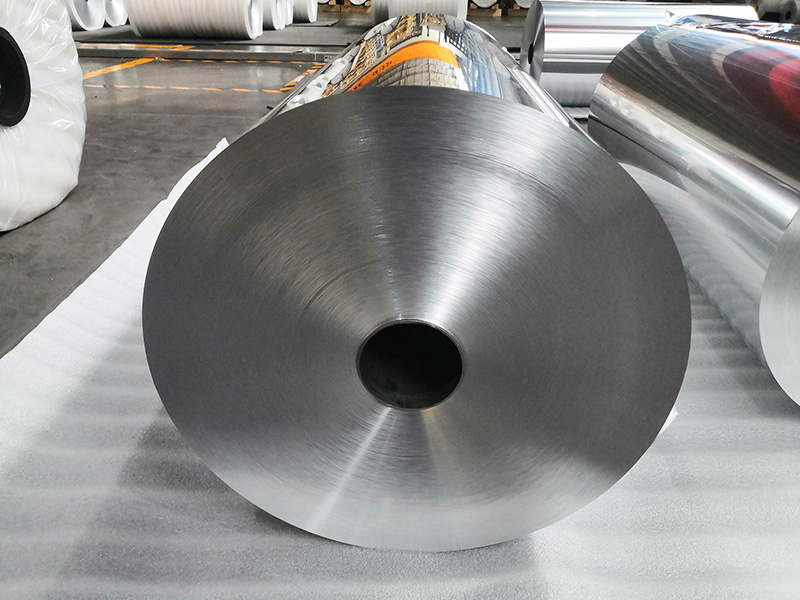
3003 lubricated container foil is an engineered forming material that combines the proven manufacturability of AA3003 aluminum with a purpose-designed lubrication layer to maximize press performance. While AA3003 provides the baseline characteristics needed for container foil—good corrosion resistance, consistent ductility, and reliable forming strength—the lubricant system is what enables high-speed, low-defect conversion into trays and cups. This “surface-engineered” approach is widely used to improve process robustness in demanding container geometries and multi-cavity tooling environments.
A key benefit of lubricated 3003 container foil is its contribution to stable, repeatable forming across long production runs. The lubricant reduces metal-to-die friction and helps control material flow, which directly supports uniform wall distribution and improved edge quality during trimming and curling. It also reduces the risk of tooling marks and surface scratches, improving the finished container’s appearance and supporting better stacking and denesting behavior. For manufacturers, these effects translate into higher line efficiency, fewer stoppages for tool cleaning, and improved consistency across batches.
From a performance perspective, 3003 lubricated foil is typically specified by thickness range, temper, surface finish, and lubricant characteristics such as coat weight, slip behavior, and volatility profile. The lubricant must be carefully balanced: sufficient to prevent sticking and tearing, yet controlled to avoid excessive residue, odor, or interference with downstream operations. Depending on the application, the lubricant may also be selected for thermal stability to accommodate oven use, or for compatibility with lidding and sealing systems when the container is part of a complete packaging format.
Quality control for 3003 lubricated container foil generally emphasizes both substrate and surface parameters. Substrate controls include alloy chemistry, gauge tolerance, pinhole and inclusion management, and mechanical property consistency. Surface controls focus on lubricant uniformity, cleanliness, and consistency of frictional behavior, since small variations can cause forming instability at high speeds. When intended for food packaging, suppliers typically support the product with compliance documentation and appropriate testing aligned with the defined conditions of use. Overall, 3003 lubricated container foil provides a cost-effective, high-throughput solution for formed aluminum containers by pairing a formable alloy with lubricant-enabled process reliability.

 English
 Arabic
 French
 Spanish
 Portuguese
 Deutsch
 Dutch
Dutch
 Italiano
 Russian
 Romaian
 Portuguese (Brazil)
 Greek
Greek