

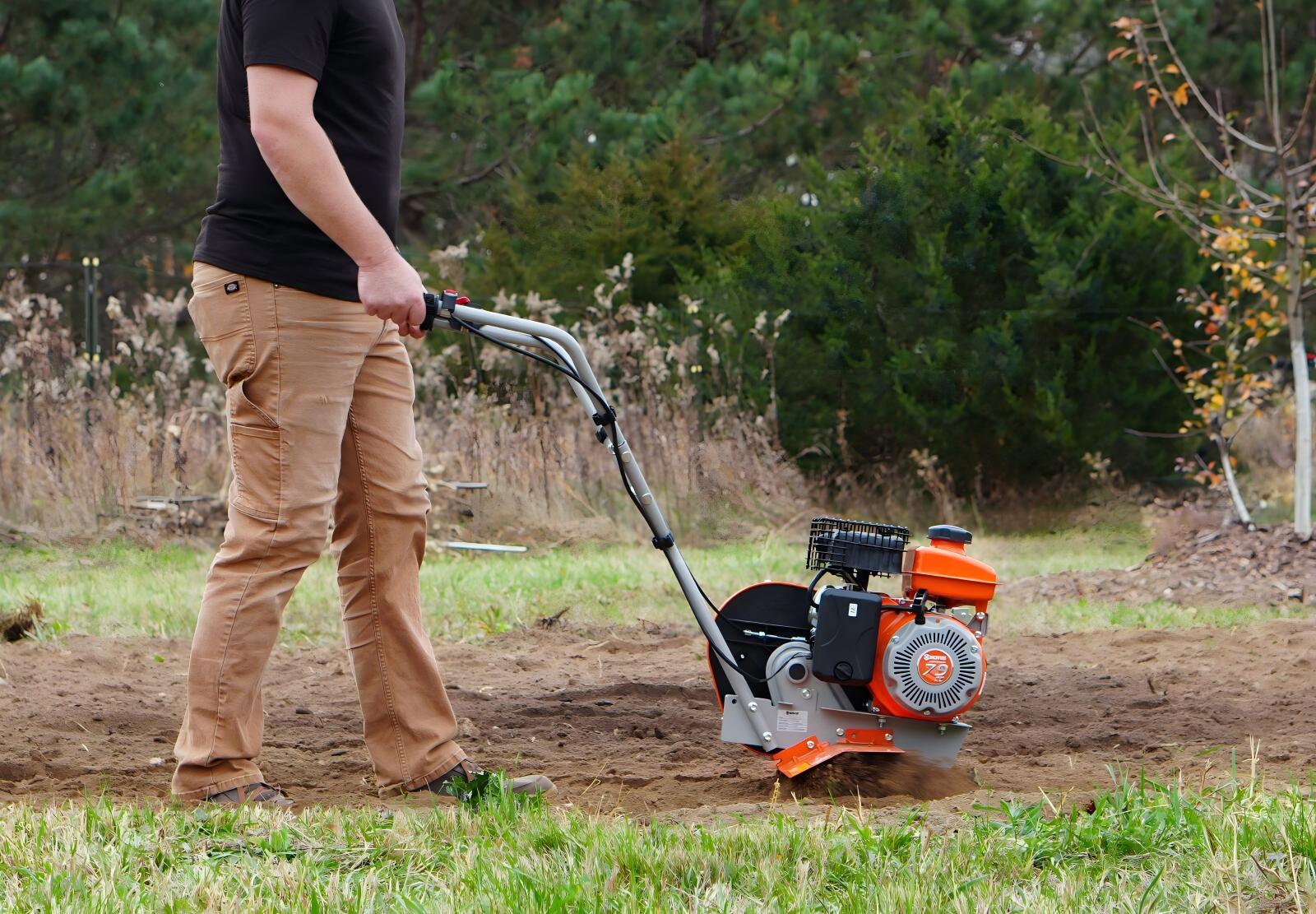
Weeds are a persistent problem in gardens, farms, and orchards, competing with crops for nutrients, sunlight, and water, and directly lowering yield and quality. Manual weeding is time‑consuming and labor‑intensive, especially for large areas, so many growers ask: Can a tiller effectively remove weeds?
The short answer is yes, but only when used correctly and in suitable conditions. This guide explains how tillers work for weed control, when to use (and not use) them, proper operation skills, and how they compare to other weeding methods.
How Does a Tiller Kill Weeds?
A tiller controls weeds through physical mechanical action, with no chemicals involved. Its working mechanism includes three key steps:
- Cut weed roots – Rotating blades slice through weed roots, stopping growth.
- Uproot and bury weeds – Blades turn soil, lifting weeds to the surface to dry out or burying them to decompose.
- Disrupt weed habitat – Loosening topsoil disturbs the environment where weed seeds germinate.
This physical weeding method is clean, safe, and ideal for organic farming, ecological planting, and any production that bans herbicide residues.
Tiller Weeding vs. Other Methods
Compared with manual and chemical weeding, tiller weeding has clear pros and cons:
- Environmental friendliness: No pesticide residues, gentle on soil microbes.
- Multi‑function: Weeds and loosens soil in one pass.
- Efficiency: Much faster than hand weeding.
- Limitation: Not a one‑time fix; requires proper depth and timing.
When to Use a Tiller for Weeding (Best Scenarios)
1. Before sowing or planting
This is the most effective time. Tillage clears most existing weeds, reduces surface weed seeds, and prepares clean, loose seedbeds. It greatly lowers weeding work for the whole growing season.
2. Shallow weeding between wide crop rows
Suitable for corn, potatoes, beans, sweet potatoes, and other widely spaced crops. Use shallow tillage to avoid harming crop roots.
3. Home gardens, small plots, and orchard rows
Small or handheld tillers work great for garden beds, greenhouse paths, and between fruit trees. They improve aeration while weeding.
When NOT to Use a Tiller for Weeding
1. Peak crop growth stage
When crop roots spread widely and planting density is high, tilling risks root damage, lodging, and yield loss. Use manual weeding or mulching instead.
2. Perennial and tough weeds
Weeds like reeds, knotweed, and some grasses have deep, extensive root systems. Tilling may cut roots into pieces and make them spread faster. Combine manual removal, mulch, or crop rotation.
3. Unsuitable soil conditions
- Too wet: Soil compacts easily; blades get stuck in mud.
- Too dry: Tilling is shallow and weeding 效果差.
- Ideal soil: Slightly moist – forms a ball when squeezed, crumbles when touched.
How to Use a Tiller for Weeding Correctly
- Control tillage depthKeep depth at 1–2 inches for weeding. Too deep brings deep‑buried weed seeds to the surface.
- Choose the right blade
- Narrow/straight blades: Best for inter‑row weeding.
- Standard rotary blades: Good for full tillage and weeding.
- Pick the right weather and timeWork on sunny days so upturned weeds dry and die quickly. Avoid tilling right after rain.
Frequently Asked Questions
Q: Will tilling cause more weeds later?
A: Improper deep tillage can bring up buried weed seeds, especially for perennials. Stick to shallow depth.
Q: Can small household tillers remove weeds?
A: Yes, they are perfect for vegetable gardens and shallow inter‑row weeding.
Q: Does tiller weeding affect crop yield?
A: Correct use helps crops grow; misuse can hurt roots and reduce yield.
Q: How often should I till for weeds?
A: Usually 2–4 times a year, based on weed growth.
Conclusion
A tiller is a high‑efficiency, eco‑friendly weeding tool for pre‑planting ground prep and shallow inter‑row weeding. It is not a universal solution: for severe perennial weeds or dense crop growth, combine it with manual weeding, mulching, or other methods.
Only with right timing, proper depth, and suitable blades can a tiller deliver reliable, long‑lasting weed control.

 English
 Arabic
 French
 Spanish
 Portuguese
 Deutsch
 Turkish
 Dutch
Dutch
 Italiano
 Russian
 Romaian
 Portuguese (Brazil)