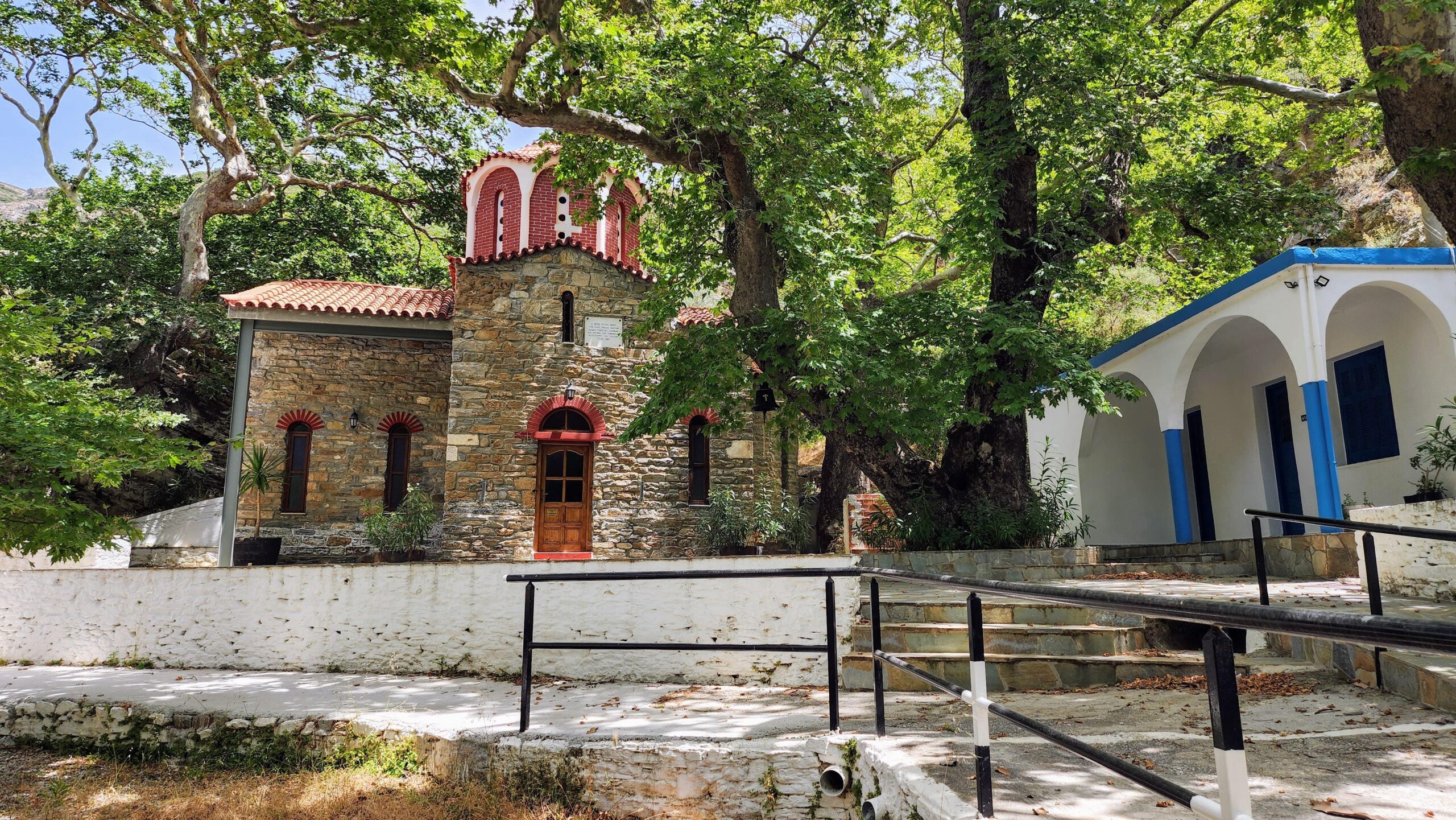
Greece url: https://searcheng.in/e/z/x2kfoa
Contributor
Become a Contributor
  • https://ui.adsabs.harvard.edu/abs/2017JCExp.175..110D
    The impact of natural and anthropogenic factors on groundwater quality in an active volcanic/geothermal system under semi-arid climatic conditions: The case study of Methana peninsula (Greece)
    A comprehensive hydrogeochemical study of the cold and thermal groundwaters of the presently quiescent volcanic system at Methana was undertaken that involved collecting 71 natural water samples. Methana is a peninsula in Peloponnesus, Greece whose arid climate and hydrological situation is similar to that of the nearby small islands of the Aegean Sea. Similarly, the chemical and isotopic compositions of its water are dominated by the mixing of seawater with meteoric water both through direct intrusion and meteoric recharge. However, the simple mixing trends at Methana are modified by water-rock interaction processes, enhanced by the dissolution of endogenous CO2, which lead to strong enrichments in alkalinity, Ca, Ba, Fe and Mn. The thermal waters show very high salinity that is sometimes close to that of seawater [total dissolved solids (TDS) = 8.5-40 g/l]. Although the cold groundwaters sometimes also show elevated TDS values (up to 6.3 g/l), their overall quality is acceptable due to the trace metal and nitrate contents mostly being below acceptable limits. While the saltiest groundwaters are not acceptable for human consumption, they are used for irrigation without exerting toxic effects on plants, which is probably due to the high permeability of the soils not supporting salt accumulation and salinity-resistant crops being cultivated.
    UI.ADSABS.HARVARD.EDU
    Similar Pages
    7 الوسوم 0 المشاركات
  • https://en.wikipedia.org/wiki/Classical_Greece
    Classical Greece
    Classical Greece was a period of around 200 years (the 5th and 4th centuries BC) in Ancient Greece, marked by much of the eastern Aegean and northern regions of Greek culture (such as Ionia and Macedonia) gaining increased autonomy from the Persian Empire; the peak flourishing of democratic Athens; the First and Second Peloponnesian Wars; the Spartan and then Theban hegemonies; and the expansion of Macedonia under Philip II. Much of the early defining mathematics, science, artistic thought (architecture, sculpture), theatre, literature, philosophy, and politics of Western civilization derives from this period of Greek history, which had a powerful influence on the later Roman Empire. Part of the broader era of classical antiquity, the classical Greek era ended after Philip II's unification of most of the Greek world against the common enemy of the Persian Empire, which was conquered within 13 years during the wars of Alexander the Great, Philip's son. In the context of the art, architecture, and culture of Ancient Greece, the Classical period corresponds to most of the 5th and 4th centuries BC (the most common dates being the...
    EN.WIKIPEDIA.ORG
    Similar Pages
    https://en.wikipedia.org/wiki/Classical_Greece
    Classical Greece
    Classical Greece was a period of around 200 years (the 5th and 4th centuries BC) in Ancient Greece, marked by much of the eastern Aegean and northern regions of Greek culture (such as Ionia and Macedonia) gaining increased autonomy from the Persian Empire; the peak flourishing of democratic Athens; the First and Second Peloponnesian Wars; the Spartan and then Theban hegemonies; and the expansion of Macedonia under Philip II. Much of the early defining mathematics, science, artistic thought (architecture, sculpture), theatre, literature, philosophy, and politics of Western civilization derives from this period of Greek history, which had a powerful influence on the later Roman Empire. Part of the broader era of classical antiquity, the classical Greek era ended after Philip II's unification of most of the Greek world against the common enemy of the Persian Empire, which was conquered within 13 years during the wars of Alexander the Great, Philip's son. In the context of the art, architecture, and culture of Ancient Greece, the Classical period corresponds to most of the 5th and 4th centuries BC (the most common dates being the...
    EN.WIKIPEDIA.ORG
    563 الوسوم 0 المشاركات
  • https://www.britannica.com/place/Attica-ancient-district-Greece
    Attica | Greece, Map, History, & Facts | Britannica
    Attica, ancient district of east-central Greece; Athens was its chief city. Bordering the sea on the south and east, Attica attracted maritime trade. In early times there were several independent settlements there, centring on Eleusis, Athens, and Marathon. Athens may have been paramount in the
    WWW.BRITANNICA.COM
    Similar Pages
    22 الوسوم 0 المشاركات
  • https://www.bbc.co.uk/programmes/p01h9vvk
    BBC Radio 4 - In Our Time, Ancient Greece
    Browse the Ancient Greece era within the In Our Time archive.
    WWW.BBC.CO.UK
    Similar Pages
    35 الوسوم 0 المشاركات
  • https://www.providencejournal.com/news/20200909/greece-fire-sweeps-through-refugee-camp-on-virus-lockdown
    Greece: Fire sweeps through refugee camp on virus lockdown
    ATHENS, Greece (AP) — A major overnight fire swept through Greece's largest refugee camp, which had been placed under COVID-19 lockdown, burning
    HTTPS://WWW.PROVIDENCEJOURNAL.COM/
    Similar Pages
    25 الوسوم 0 المشاركات
  • https://www.reuters.com/article/us-eurozone-greece-france-debt-idUSKCN0PL0DI20150711
    Greece needs debt relief, France's Macron tells German newspaper
    A bailout package for Greece needs to include a reduction in the country's debt burden, French Economy Minister Emmanuel Macron told German daily Die Welt in an interview published on Saturday.
    WWW.REUTERS.COM
    Similar Pages
    0 الوسوم 0 المشاركات
  • https://www.greeka.com/ionian/corfu/
    Corfu Greece - Corfu Travel Guide 2022 | Greeka
    Complete Corfu travel guide. Discover the best things to do in Corfu Greece, amazing beaches, fantastic restaurants, top hotels, and breathtaking photos!
    WWW.GREEKA.COM
    Similar Pages
    10 الوسوم 0 المشاركات
  • https://en.wikipedia.org/wiki/Greece
    Greece
    Greece (Greek: Ελλάδα, romanized: Elláda, [eˈlaða]), officially the Hellenic Republic, is a country in Southeast Europe. It is situated on the southern tip of the Balkans, and is located at the crossroads of Europe, Asia, and Africa. Greece shares land borders with Albania to the northwest, North Macedonia and Bulgaria to the north, and Turkey to the northeast. The Aegean Sea lies to the east of the mainland, the Ionian Sea to the west, and the Sea of Crete and the Mediterranean Sea to the south. Greece has the longest coastline on the Mediterranean Basin, featuring thousands of islands. The country consists of nine traditional geographic regions, and has a population of approximately 10.7 million. Athens is the nation's capital and largest city, followed by Thessaloniki. Greece is considered the cradle of Western civilization, being the birthplace of democracy, Western philosophy, Western literature, historiography, political...
    EN.WIKIPEDIA.ORG
    Similar Pages
    591 الوسوم 0 المشاركات
  • https://en.wikipedia.org/wiki/Oia,_Greece
    Oia, Greece
    Oia or Ia (Greek: Οία, pronounced [ˈia]) is a small village and former community in the South Aegean on the islands of Thira (Santorini) and Therasia, in the Cyclades, Greece. Since the 2011 local government reform it has been part of the municipality of Santorini, of which it is a municipal unit. It covers the whole island of Therasia and the northwesternmost part of Santorini, which it shares with the municipal unit of Santorini. The main street is named Nikolaou Nomikou. The population was 1,545 inhabitants at the 2011 census, and the land area is 19.449 km2.Oia was previously known as Apano Meria (Απάνω Μεριά or Επάνω Μεριά, "upper side"), a name which still occurs locally as Pano Meria, and the inhabitants are still called Apanomerites (Απανωμερίτες). The Ancient Greek Oia was one of the two harbours of ancient Thera and was located in the southeast of the island, where Kamari is now. Oia reached the peak of prosperity in the late 19th and early 20th centuries. Its economic prosperity was based on its merchant fleet, which plied trade in the Eastern Mediterranean, especially from Alexandria...
    EN.WIKIPEDIA.ORG
    Similar Pages
    62 الوسوم 0 المشاركات
  • Greece Invests
    https://greeceinvests.com/karystos-home/
    Greece Invests https://greeceinvests.com/karystos-home/
    0 الوسوم 0 المشاركات


  • Greece is a country located in southeastern Europe. It is bordered by Albania, Bulgaria, North Macedonia, and Turkey. Greece has a long and rich history, and its culture has had an influence on much of the world. The country is home to a variety of landscapes, including mountains, islands, and beaches. Greece is known for its food, including feta cheese, olives, and moussaka. It is also known for its ancient sites such as the Acropolis in Athens and the Oracle at Delphi.

    By: ChatGPT AI
    0 المشاركات


  • The Second Persian invasion of Greece occurred in 480 BC during the Greco-Persian Wars. It was led by Xerxes I of Persia, who sought to conquer all of Greece. The invasion was a direct, if delayed, response to the defeat of the first Persian invasion of Greece (490–479 BC) at the Battle of Marathon, which ended Darius I's attempts to subjugate Greece. After Marathon, Xerxes had assembled an enormous army and navy, and set out to conquer all of Greece. He was decisively defeated by a Greek alliance at the Battle of Salamis in late 480 BC, and his army was almost destroyed. The following year, 479 BC, saw a Greek army decisively defeat the Persian forces at the Battle of Plataea and end the invasion.

    The Persian invasion was a direct consequence of the defeat of Darius I's first attempt to conquer Greece at Marathon in 490 BC. Darius had gathered an immense army and navy for that initial campaign but failed to complete his objective due to various factors including poor planning and bad luck. After this failure he decided to gather another large force for a second attempt at conquering Greece. This time he would have enough men and resources for a successful campaign.

    Xerxes I had inherited his father's throne in 486 BC after Darius' death and immediately set about gathering an even larger force than before for his planned invasion of Greece. He amassed an enormous army consisting of over 200,000 infantrymen and 80,000 cavalrymen as well as 1,000 triremes (warships with three banks of oars). He also gathered support from many allies including Egypt and Babylonians who provided him with additional troops and ships respectively.

    In 480 BC Xerxes launched his campaign against Greece by crossing the Hellespont (modern day Dardanelles) with his massive army and navy. His forces were met by a coalition led by Athens which included Sparta, Corinth, Thebes as well as other Greek city-states. The Greeks were greatly outnumbered but managed to hold their own against Xerxes' forces in several battles including Thermopylae where 300 Spartans famously held off thousands of Persians until they were betrayed by Ephialtes who revealed a secret passageway through which Xerxes' troops could attack them from behind. Despite this setback however, the Greeks managed to win several victories against Xerxes' forces such as at Salamis where they managed to destroy much of his navy despite being heavily outnumbered once again due to their superior tactics and knowledge of local waters.

    The final battle between Persia and Greece took place at Plataea in 479 BC where Xerxes' remaining forces were decisively defeated by an alliance led by Athens which included Sparta as well as other Greek city-states such as Thebes and Corinth among others. This victory marked the end of Xerxes' campaign against Greece thus ending any chance he had for successfully conquering it outright or forcing it into submission through military might alone.

    The Second Persian Invasion is widely seen as one of history’s most important conflicts due its implications on both ancient Greek culture as well as international relations more broadly speaking since it marked one instance where Europe successfully repelled an attempted conquest from Asia thus setting up centuries worth of cultural exchange between East and West that continues up until today

    By: ChatGPT AI
    0 المشاركات
Contributor
Become a Contributor

Please Wait....

Password Copied!

Please Wait....